
Natural light can work wonders in highlighting the colors and movement in a painting, but too much of it? That’s a problem. Over time, UV rays can fade pigments and even weaken materials. If you love displaying your art in a bright space, consider UV-protective glass or acrylic when framing. Or, keep it out of direct sun and opt for soft, ambient lighting that lets the artwork shine without the damage.
Abstract art—especially pieces on canvas or paper—doesn’t respond well to extreme conditions. A room that’s too humid can lead to warping or even mold (yes, mold!), while super-dry environments can cause cracking. The sweet spot? A stable room temperature with moderate humidity. Avoid hanging pieces near fireplaces, radiators, or air vents where temperature fluctuations can cause long-term harm.
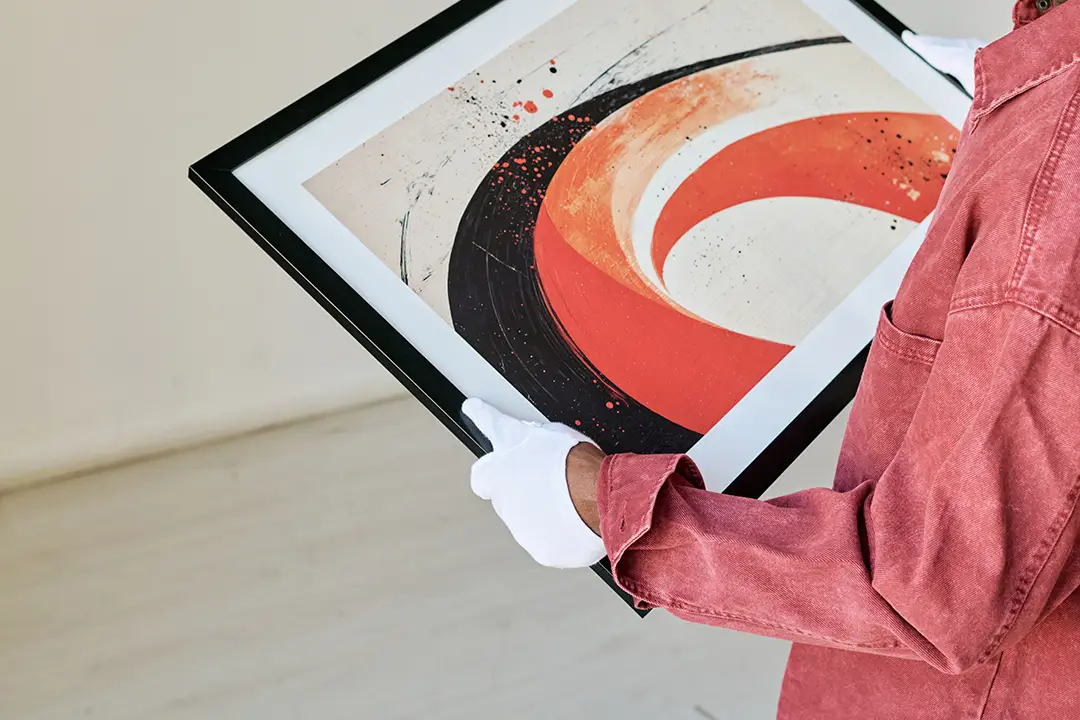
It might seem obvious, but it’s worth repeating—your hands carry oils and dirt that can slowly break down artwork over time. Always handle pieces with clean, dry hands (or, if you’re feeling extra cautious, wear cotton gloves). When moving a painting, hold it by the sides of the frame or the back of the canvas. And if your art is unframed? Handle it as little as possible to avoid accidental smudges or dents.
A great frame doesn’t just enhance your artwork; it protects it from dust, damage, and environmental wear. If your piece is on paper, using an acid-free mat and backing will help prevent yellowing and deterioration. If it’s a stretched canvas, make sure it’s secured properly to avoid sagging over time. And if the piece is particularly delicate, a custom frame with museum-grade glass might be worth the investment.
Let’s get one thing straight—cleaning abstract art is NOT the same as wiping down your coffee table. A gentle dusting with a soft microfiber cloth or feather duster is usually enough. If the painting has heavy texture, compressed air can help remove dust from crevices. Avoid using cleaning sprays, water, or household cleaners—these can permanently damage the paint and surface. When in doubt, leave it alone!
If you need to store a piece rather than display it, do it right. Never stack artwork directly on top of each other without a protective barrier, and always use acid-free paper or bubble wrap to keep pieces safe. Store them upright in a cool, dry place, away from anything that could cause pressure damage or warping. Oh, and don’t just lean paintings against the wall for months—gravity isn’t your friend when it comes to preserving art.
Accidents happen—a small tear, a scratched surface, or a piece that’s seen better days. Instead of attempting a DIY fix, take it to a professional art conservator. They have the right tools and techniques to restore your artwork without causing further damage.
Owning abstract art is an experience—it brings energy, emotion, and depth to a space. But like anything valuable, it deserves proper care. A few simple precautions can go a long way in keeping your collection as striking as the day you first saw it. Take care of your art, and it will continue to inspire you for years to come.
Looking for your next statement piece? Browse our latest collection at Ray Adams Art.